Top Ad 728x90

Tuesday, March 31, 2026

Homemade Sugar Donuts

by


Introduction

There’s something undeniably magical about a freshly made donut, especially one coated generously in sparkling sugar. It evokes memories of childhood, lazy weekend breakfasts, and the simple joy of a perfectly sweet treat. While store-bought donuts certainly have their place, crafting them from scratch in your own kitchen elevates the experience to a whole new level. Imagine the aroma filling your home, the anticipation building as the golden disks emerge from the oil, and finally, that first glorious bite of a warm, fluffy sugar donut. This isn’t just baking; it’s creating comfort, tradition, and pure happiness.

Many people shy away from making donuts at home, intimidated by the idea of working with yeast or frying. But I’m here to tell you, it’s far simpler than you might think! This recipe for Homemade Sugar Donuts is designed to be accessible for home cooks of all skill levels, guiding you through each step with clarity and ease. We’ll demystify the process, from activating the yeast to achieving that perfect golden-brown crispness and the ideal sugar coating. The result? Donuts that are incredibly soft, wonderfully airy, and perfectly sweet, putting any store-bought version to shame.

What truly makes these donuts special is their incredible texture and balanced sweetness. Unlike dense, cakey donuts, these boast a light, pillowy crumb that practically melts in your mouth. The secret lies in a well-hydrated dough and proper proofing, which create those delightful air pockets. And then there’s the sugar coating – a simple yet essential element. Applied while the donuts are still warm, it adheres beautifully, creating a delicate crunch that complements the soft interior. This recipe focuses on simple, wholesome ingredients, allowing the natural flavors and textures to shine through, making every bite a pure moment of indulgence.

Nutritional Information

Per serving (approximate values):

  • Calories: 350
  • Protein: 5g
  • Carbohydrates: 45g
  • Fat: 18g
  • Fiber: 1g
  • Sodium: 200mg

Ingredients

  • 2 ¼ teaspoons active dry yeast (one standard packet)
  • ½ cup warm milk (105-115°F / 40-46°C)
  • ¼ cup granulated sugar, plus 1 ½ cups for coating
  • 1 large egg, at room temperature
  • ¼ cup unsalted butter, melted and cooled slightly
  • 1 teaspoon vanilla extract
  • ½ teaspoon salt
  • 2 ½ to 3 cups all-purpose flour, plus more for dusting
  • 6-8 cups vegetable oil, canola oil, or peanut oil, for frying
  • Instructions

    1. Activate the Yeast: In a large bowl, combine the warm milk and 1 teaspoon of the granulated sugar. Sprinkle the active dry yeast over the top. Stir gently and let it sit for 5-10 minutes, or until the mixture becomes foamy. This indicates the yeast is active and ready to work.
    2. Combine Wet Ingredients: To the foamy yeast mixture, add the remaining ¼ cup granulated sugar, the large egg, melted butter, and vanilla extract. Whisk everything together until well combined.
    3. Add Dry Ingredients: In a separate bowl, whisk together 2 ½ cups of the all-purpose flour and the salt. Gradually add the dry ingredients to the wet ingredients, mixing with a wooden spoon or a stand mixer with a dough hook attachment. Start with 2 ½ cups of flour and add more, a tablespoon at a time, if the dough is too sticky.
    4. Knead the Dough: Once the dough comes together, turn it out onto a lightly floured surface. Knead for 5-7 minutes, or until the dough is smooth, elastic, and no longer sticky. If using a stand mixer, knead on medium speed for 4-5 minutes. The dough should be soft and slightly tacky, but not sticking to your hands or the bowl.
    5. First Rise (Proofing): Lightly grease a clean bowl with a little oil. Place the dough in the bowl, turning it once to coat. Cover the bowl with plastic wrap or a clean kitchen towel and place it in a warm, draft-free spot. Let the dough rise for 1 to 1 ½ hours, or until it has doubled in size. This process is crucial for a light and airy donut.
    6. Shape the Donuts: Once the dough has doubled, gently punch it down to release the air. Turn the dough out onto a lightly floured surface. Using a rolling pin, roll the dough to about ½-inch thickness. Use a 3-inch donut cutter or two different-sized round cutters (e.g., a 3-inch biscuit cutter for the outer ring and a 1-inch cutter for the center hole) to cut out the donut shapes. Reroll any scraps and cut out more donuts until all the dough is used. You should get about 12-15 donuts and donut holes.
    7. Second Rise: Carefully transfer the cut donuts and donut holes to a lightly floured baking sheet, leaving some space between each. Cover loosely with plastic wrap or a clean kitchen towel and let them rise again for another 30-45 minutes, or until visibly puffy. This second rise makes them extra light.
    8. Prepare for Frying: While the donuts are undergoing their second rise, pour the vegetable, canola, or peanut oil into a large, heavy-bottomed pot or Dutch oven. The oil should be at least 3 inches deep. Heat the oil over medium heat to 350°F (175°C). Use a candy thermometer or deep-fry thermometer to monitor the temperature accurately. In a shallow dish, place the remaining 1 ½ cups of granulated sugar for coating.
    9. Fry the Donuts: Once the oil is at the correct temperature and the donuts are puffy, carefully place 2-3 donuts into the hot oil, being careful not to overcrowd the pot. Fry for 1-2 minutes per side, or until golden brown. The donuts should puff up and float. Adjust heat as needed to maintain a consistent oil temperature.
    10. Drain and Coat: Using a slotted spoon or spider, carefully remove the fried donuts from the oil. Place them on a wire rack lined with paper towels to drain excess oil for about 30 seconds to 1 minute.
    11. Sugar Coating: While the donuts are still warm (this is key!), transfer them to the shallow dish with granulated sugar. Gently toss or roll them in the sugar until evenly coated on all sides. Repeat with the remaining donuts until all are fried, drained, and coated.
    12. Serve Immediately: Serve your homemade sugar donuts warm and enjoy!

    Cooking Tips and Variations

    Achieving perfect homemade sugar donuts is all about attention to a few key details. Firstly, oil temperature is paramount. If the oil is too cool, your donuts will absorb too much oil and become greasy and heavy. If it’s too hot, they’ll brown too quickly on the outside while remaining raw in the middle. Invest in a good thermometer and adjust your heat as you fry to keep it consistently around 350°F (175°C). A consistent temperature ensures even cooking and a beautiful golden-brown color. Don’t overcrowd the pot; frying too many donuts at once will cause the oil temperature to drop significantly.

    Proper dough handling is another crucial aspect. Avoid overworking the dough during kneading, as this can lead to tough donuts. Knead just until it’s smooth and elastic. Similarly, when rolling out the dough, use a light hand. The goal is a soft, tender crumb, and overworking gluten can prevent that. When cutting your donuts, try to make clean cuts; jagged edges can sometimes lead to uneven frying. For the best rise, ensure your yeast is active (it should foam when mixed with warm milk and sugar) and that your dough has sufficient time to proof in a warm, draft-free environment. The dough should visibly double in size during the first rise and become noticeably puffy during the second.

    The sugar coating technique is also vital for the classic sugar donut experience. You must coat the donuts while they are still warm, immediately after draining the excess oil. The residual heat helps the sugar adhere and slightly melt, creating that perfect, slightly crusty, sweet exterior. If you wait too long, the sugar won’t stick effectively. For an extra boost of flavor, consider making cinnamon sugar donuts. Simply combine 1 ½ cups granulated sugar with 1-2 teaspoons of ground cinnamon for the coating. This adds a wonderful aromatic warmth that pairs beautifully with the soft donut. Another delightful variation is a simple glaze. Instead of sugar, whisk together 2 cups powdered sugar with 3-4 tablespoons milk or water and ½ teaspoon vanilla extract until smooth. Dip the warm donuts into the glaze instead of rolling in sugar.

    For those who prefer a richer flavor, you can substitute some of the all-purpose flour with bread flour for a slightly chewier texture, or add a pinch of nutmeg to the dough for a classic donut spice. If you don’t have a donut cutter, don’t despair! You can use a wide-mouth glass or cookie cutter for the outer ring and a smaller round object like a bottle cap or piping nozzle for the center hole. Just make sure the edges are clean. Finally, consider the oil you use for frying. Vegetable, canola, or peanut oil are excellent choices due to their high smoke points and neutral flavors. Avoid olive oil or butter, as they have lower smoke points and can burn easily, imparting an unpleasant taste to your donuts.

    Storage and Reheating

    Homemade sugar donuts are undoubtedly at their absolute best when enjoyed warm and fresh, right after frying and coating. The soft, airy texture and delicate sugar crust are unparalleled in this state. However, if you find yourself with leftovers (a rare but possible occurrence!), proper storage can help maintain their quality for a short period.

    To store leftover sugar donuts, allow them to cool completely to room temperature. Storing them while still warm will create condensation, making them soggy. Once cool, place them in an airtight container. You can layer them with parchment paper to prevent sticking. They will keep at room temperature for 1-2 days. Be aware that the sugar coating may absorb moisture over time and become less crisp, and the donuts themselves will lose some of their initial softness. They won’t be quite as heavenly as fresh, but they will still be a delicious treat.

    For longer storage, you can freeze unfrosted (un-sugared) donuts. Once fried and cooled, place them in a single layer on a baking sheet and freeze until solid. Then, transfer the frozen donuts to a freezer-safe bag or airtight container, separating layers with parchment paper. They can be frozen for up to 1 month. When you’re ready to enjoy them, thaw them at room temperature. You can then gently warm them and coat them in fresh sugar.

    Reheating sugar donuts can help revive their texture, though they won’t quite reach the perfection of freshly fried. The best method for reheating is to warm them gently in a microwave for 10-15 seconds per donut. Be careful not to overheat, as this can make them tough. Alternatively, you can place them on a baking sheet and warm them in a preheated oven at 300°F (150°C) for about 5-7 minutes. This method can help crisp up the exterior slightly. If you have unfrosted donuts that were frozen, thaw them first, then warm them in the oven and coat them in fresh sugar for the best results. Avoid reheating multiple times, as the quality will degrade significantly with each reheat.

    Frequently Asked Questions

    Why are my homemade donuts dense or tough?

    There are a few common reasons for dense or tough donuts. Overworking the dough is a primary culprit; too much kneading develops excess gluten, leading to a chewy, tough texture. Ensure you knead just until the dough is smooth and elastic, but not overly stiff. Another reason could be insufficient proofing; if the dough doesn’t rise enough, it won’t be airy. Make sure your yeast is active and allow ample time for both rises in a warm, draft-free spot. Lastly, if your frying oil is too cool, the donuts will absorb more oil and become heavy instead of light and fluffy.

    Can I make these donuts without a deep fryer?

    Absolutely! A deep fryer is not necessary. You can easily make these homemade sugar donuts in a large, heavy-bottomed pot or Dutch oven on your stovetop. The key is to ensure the pot is deep enough to hold at least 3 inches of oil and that you use a reliable thermometer to monitor the oil temperature accurately. A sturdy pot with high sides will also help prevent oil splatters and maintain a consistent temperature more effectively.

    How do I prevent my donuts from becoming greasy?

    Preventing greasy donuts boils down to controlling the oil temperature. If the oil is too cool (below 350°F / 175°C), the donuts will absorb excess oil as they cook, resulting in a heavy, greasy texture. Always use a thermometer to maintain the ideal temperature. Additionally, don’t overcrowd the pot when frying; this causes the oil temperature to drop. Fry in small batches to keep the oil hot. Lastly, ensure you drain the fried donuts on a wire rack lined with paper towels immediately after removing them from the oil to catch any excess surface oil.

    Can I prepare the dough ahead of time?

    Yes, you can prepare the dough ahead of time. After the first rise, you can punch down the dough, place it in a lightly oiled bowl, cover it tightly with plastic wrap, and refrigerate it overnight (up to 12-18 hours). The cold temperature will slow down the yeast activity. When you’re ready to make the donuts, take the dough out of the refrigerator and let it sit at room temperature for about 30-60 minutes to warm up slightly before rolling it out, cutting, and proceeding with the second rise and frying. This can be a great way to break up the donut-making process.

No-Bake Chocolate Eclair Cake: The Effortless Dessert Everyone Will Crave

by


Ingredients You’ll Need:

  • 1 box (14.4 oz) graham crackers
  • 2 packages (3.4 oz each) instant vanilla pudding mix
  • 3 cups cold milk
  • 1 tub (8 oz) whipped topping (like Cool Whip), thawed
  • 1 can (16 oz) chocolate frosting or homemade chocolate ganache

How to Make No-Bake Chocolate Eclair Cake:

Step 1: Mix the Filling
In a large bowl, whisk the instant pudding mix with the cold milk until thickened (about 2 minutes). Gently fold in the whipped topping until smooth and well combined.

Step 2: Layer the Cake
In a 9×13-inch dish, lay down a single layer of graham crackers, breaking them if needed to fit. Spread half the pudding mixture on top. Add another layer of graham crackers, then the rest of the pudding mixture. Finish with a final layer of graham crackers.

Step 3: Frost the Top
Microwave the chocolate frosting (or ganache) for about 15–20 seconds to make it easier to spread. Pour it over the top layer of graham crackers and smooth it out evenly.

Step 4: Chill and Set
Cover the dish and refrigerate for at least 4 hours, but overnight is best. The graham crackers will soften into a cake-like texture, and the flavors will meld beautifully.


Optional Variations

  • Use chocolate graham crackers for a double-chocolate experience.
  • Add sliced bananas or strawberries between layers for a fruity twist.
  • Try different pudding flavors, like French vanilla or cheesecake.

Serving Tips

Serve chilled, straight from the fridge. A drizzle of caramel or a dollop of whipped cream on top of each slice can make it even more irresistible. This dessert also freezes well if you want to make it far in advance.


Final Thoughts

The No-Bake Chocolate Eclair Cake is the kind of dessert that wins hearts without stressing the cook. It’s humble in preparation, luxurious in flavor, and always disappears quickly at any gathering. Whether you’re making it for a birthday, potluck, or just to satisfy a late-night sweet tooth, this creamy classic is a guaranteed hit.

Enjoy!

Loaded Cheesy Pocket Tacos Recipe

by


Ingredients


  • 1 lb ground beef
  • 1 small onion, chopped
  • 2 cloves garlic, minced
  • 1 packet taco seasoning mix
  • 1/4 cup water
  • 1 cup shredded cheddar cheese
  • 1 cup shredded mozzarella cheese
  • 8 medium flour tortillas
  • 2 tablespoons vegetable oil
  • 1/2 cup sour cream
  • 1 cup shredded lettuce
  • 1/2 cup diced tomatoes
  • 1/4 cup sliced black olives
  • 1/4 cup chopped green onions
  • 1/4 cup chopped fresh cilantro (optional)

Instructions

Step 1: Prepare the Ground Beef Filling

  1. In a large skillet over medium heat, add the ground beef and chopped onion. Cook until the beef is browned and the onion is soft, about 5-6 minutes. Drain any excess fat.
  2. Add the minced garlic and cook for an additional 1 minute.
  3. Stir in the taco seasoning mix and water. Simmer for 3-4 minutes, or until the mixture has thickened. Remove from heat and let cool slightly.

Step 2: Assemble the Pocket Tacos

  1. Lay a tortilla flat on a clean surface. Sprinkle a small amount of shredded cheddar and mozzarella cheese in the center of the tortilla.
  2. Spoon a portion of the ground beef mixture over the cheese.
  3. Fold the sides of the tortilla in towards the center, then fold the bottom and top edges in to create a sealed pocket.
  4. Repeat with the remaining tortillas, beef mixture, and cheese.

Step 3: Cook the Pocket Tacos

  1. Heat a large skillet or griddle over medium heat and add 1 tablespoon of vegetable oil.
  2. Place the pocket tacos seam-side down in the skillet. Cook for 2-3 minutes on each side, or until golden brown and crispy. Work in batches if necessary, adding more oil as needed.
  3. Remove the cooked pocket tacos from the skillet and place them on a paper towel-lined plate to drain any excess oil.

Step 4: Serve

  1. Serve the loaded cheesy pocket tacos warm, topped with shredded lettuce, diced tomatoes, sliced black olives, chopped green onions, and a dollop of sour cream.
  2. Garnish with chopped fresh cilantro, if desired.

Cooking Tips & Notes

  • Tortilla Choice: Use medium flour tortillas that are soft and pliable to make folding easier. If the tortillas are stiff, warm them in the microwave for a few seconds to make them more flexible.
  • Cheese Blend: Feel free to use your favorite cheese blend. Monterey Jack or pepper jack cheese also work well for added flavor.
  • Filling Tip: Be careful not to overfill the tortillas, as it can make it difficult to seal them properly.

Variations

  • Spicy Version: Add diced jalapeños or a pinch of crushed red pepper flakes to the beef mixture for some heat.
  • Vegetarian Option: Substitute the ground beef with black beans, pinto beans, or a plant-based meat substitute for a vegetarian version.
  • Breakfast Pocket Tacos: Use scrambled eggs, cooked sausage or bacon, and cheese to make a delicious breakfast version of these pocket tacos.
  • BBQ Beef Pocket Tacos: Mix barbecue sauce into the ground beef mixture for a smoky twist.

Frequently Asked Questions (FAQs)

1. Can I Make These Pocket Tacos Ahead of Time?

Yes! You can assemble the pocket tacos ahead of time and refrigerate them for up to 24 hours. When ready to eat, cook them in a skillet until golden and crispy.

2. How Do I Store Leftovers?

Store any leftover pocket tacos in an airtight container in the refrigerator for up to 3 days. Reheat them in a skillet over medium heat to maintain their crispy texture.

3. Can I Freeze Pocket Tacos?

Absolutely! Wrap each uncooked pocket taco individually in plastic wrap and place them in a freezer-safe bag. Freeze for up to 3 months. Cook directly from frozen, adding a few extra minutes to the cooking time.

4. What Can I Serve with Loaded Cheesy Pocket Tacos?

These pocket tacos are great on their own, but they also pair well with Mexican rice, refried beans, or a side of chips and guacamole.

Loaded Cheesy Pocket Tacos are a fun and delicious way to enjoy all the flavors of classic tacos in a convenient handheld form. The crispy tortilla, seasoned beef, and melty cheese make for a comforting and satisfying meal that’s perfect for any occasion. Customize the fillings to your liking and enjoy this easy-to-make dish that’s sure to become a family favorite!

Dump frozen chicken tenderloins in the crock pot with 4 other cheap ingredients and get a weeknight dinner so delicious your husband will be begging

by


This 5-ingredient slow cooker spring blossom chicken is exactly the kind of weeknight dinner I lean on when work runs late and I still want something that feels a little special. You literally dump frozen chicken tenderloins into the crock pot, add four cheap pantry ingredients, flip it on, and walk away.

The “spring blossom” part comes from a light, bright combo of apricot preserves and Italian dressing that makes a sweet-tangy glaze, plus a handful of frozen peas stirred in at the end for color and freshness. It’s not fussy, it’s not fancy, but it tastes like you put in way more effort than you actually did—and yes, it’s absolutely husband-begging-for-seconds material.

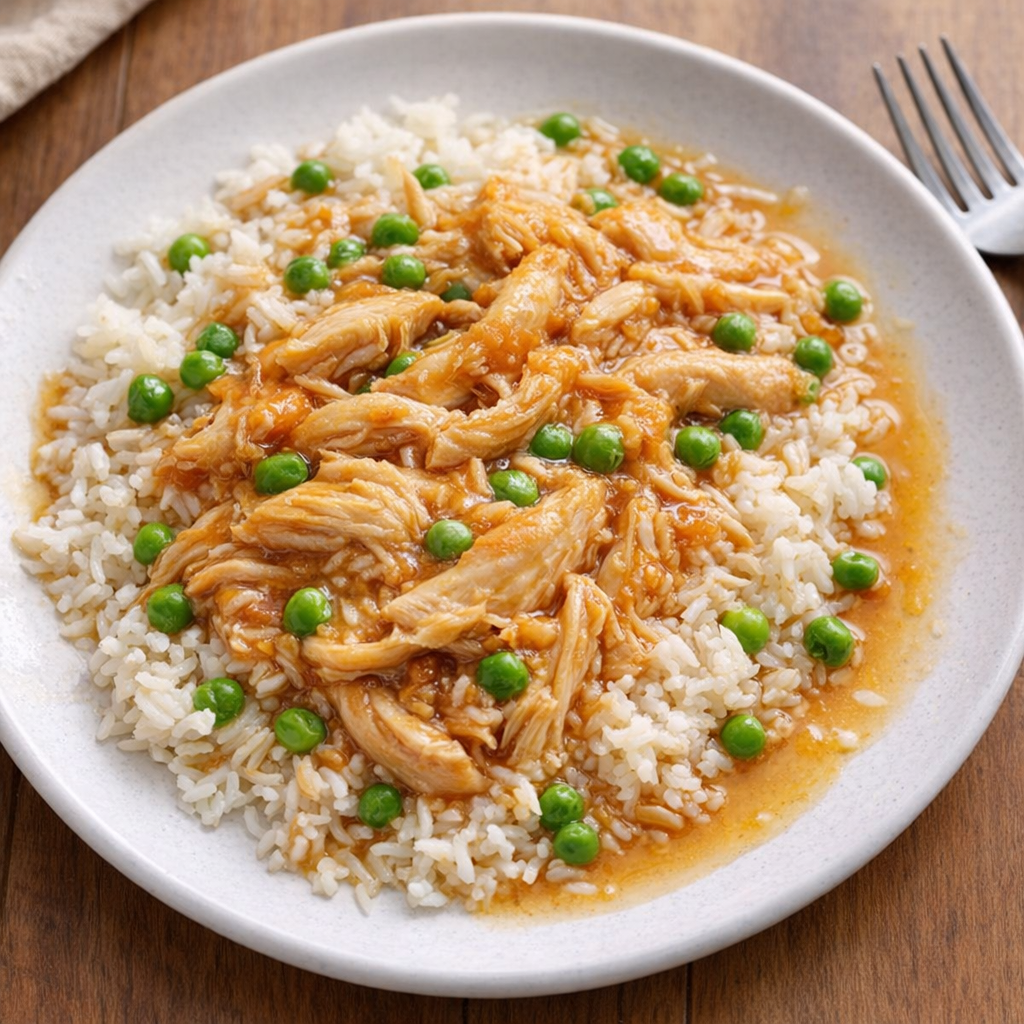
Slow cooker spring blossom chicken served over rice

Serve this spring blossom chicken over fluffy white rice, buttered egg noodles, or mashed potatoes so all that glossy sauce has something to soak into. A simple side salad or steamed green beans keeps the meal light and balances the sweetness of the glaze.

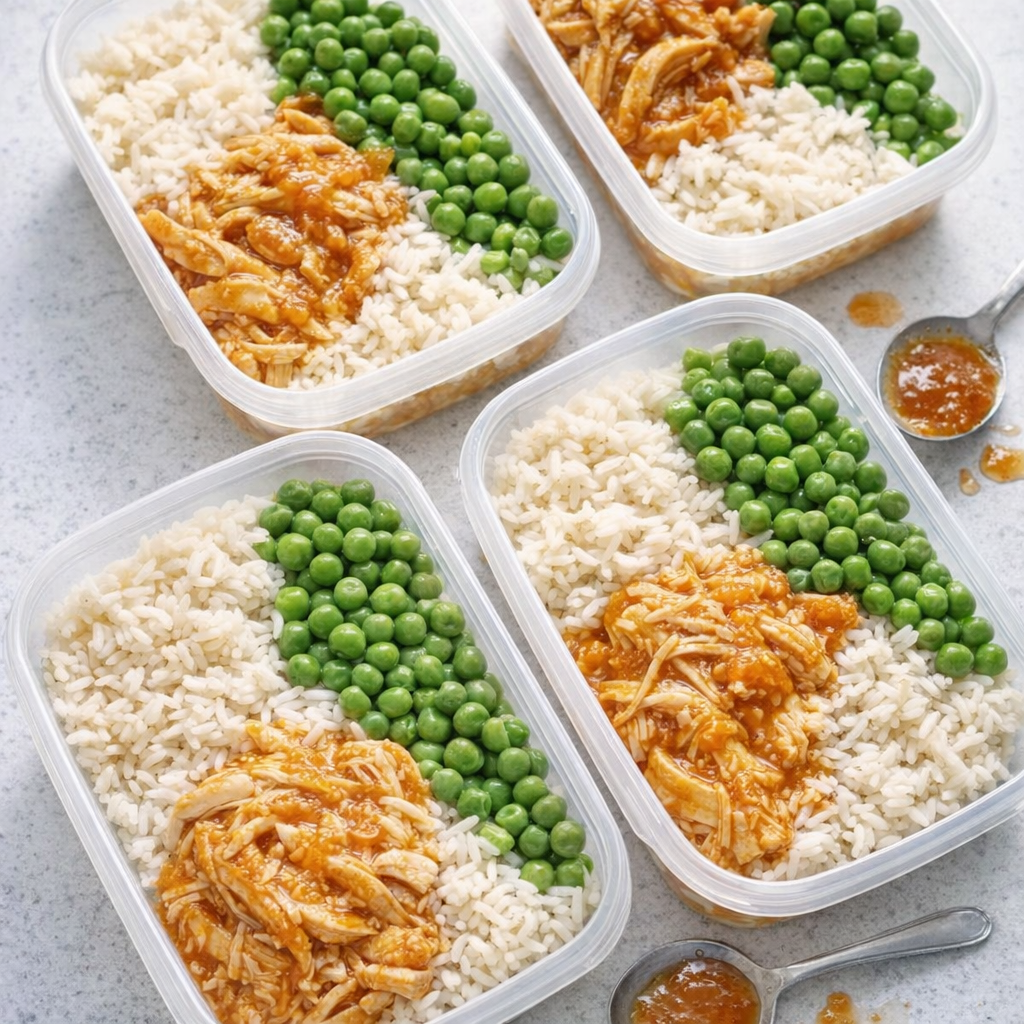
If you’re packing leftovers for lunch, tuck the chicken and sauce into meal prep containers with rice and a handful of extra frozen peas or mixed veggies. Garlic bread or dinner rolls are great for mopping up every last bit of sauce.

5-Ingredient Slow Cooker Spring Blossom Chicken

Servings: 4

Ingredients

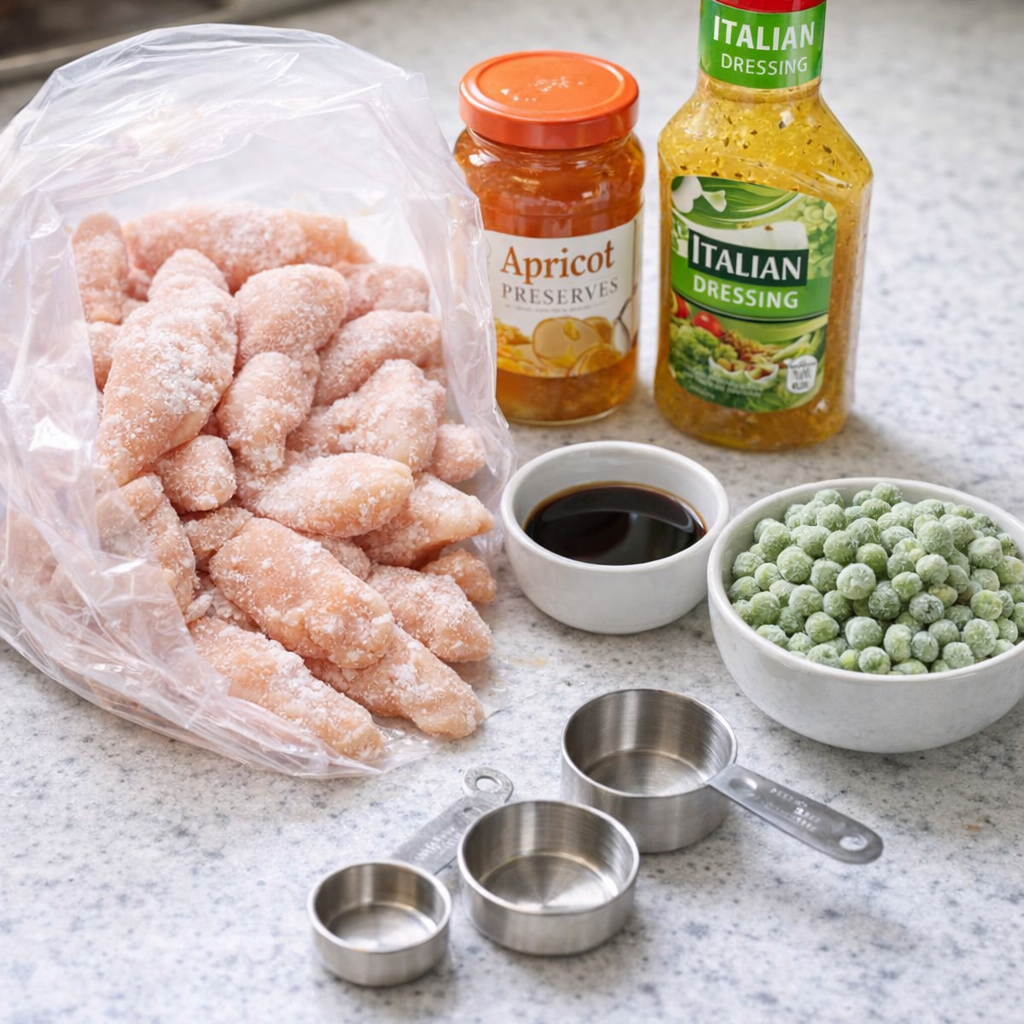
2 pounds frozen chicken tenderloins

1 cup thick apricot preserves (or apricot jam)
3/4 cup zesty Italian salad dressing
2 tablespoons low-sodium soy sauce
1 cup frozen green peas

Ingredients for spring blossom chicken arranged on a kitchen counter

Directions

Place the frozen chicken tenderloins in an even layer on the bottom of your slow cooker insert. They can overlap slightly, but try not to stack them too high so they cook evenly.

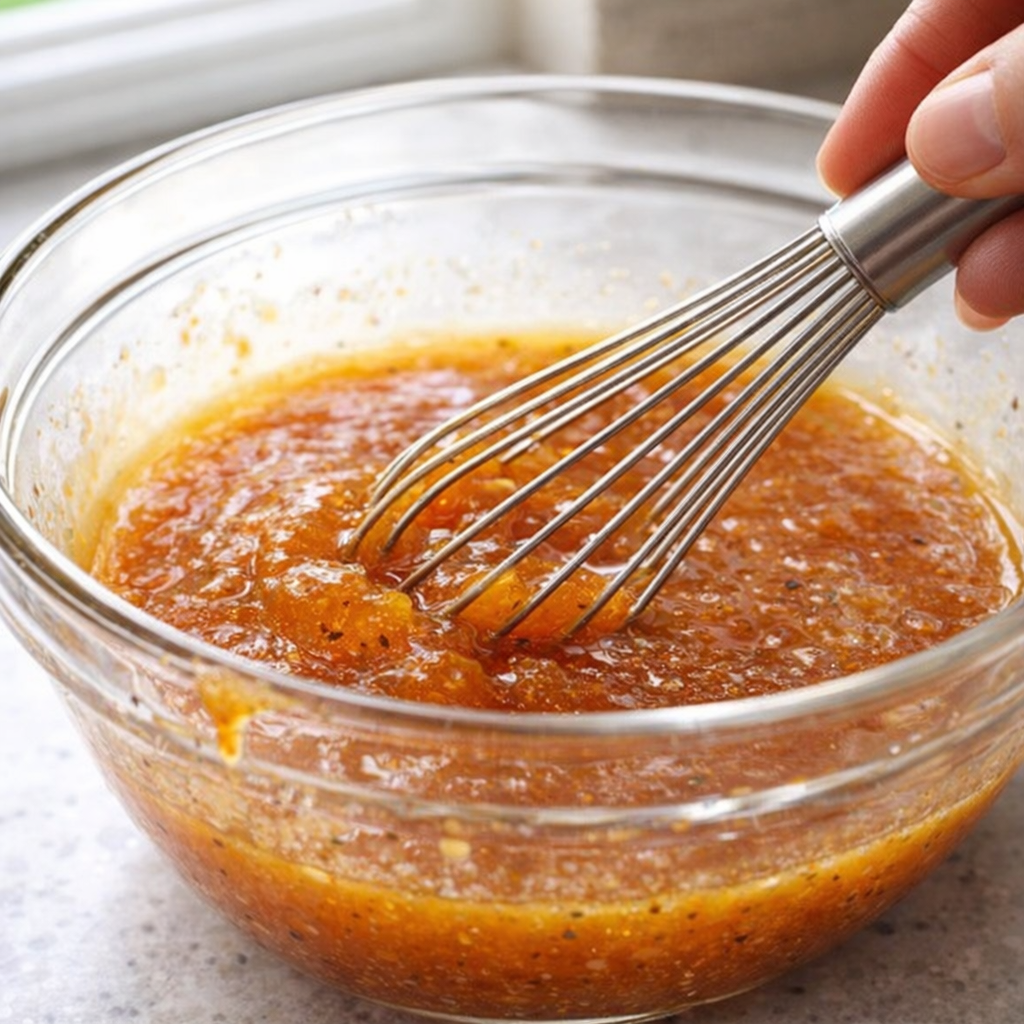
In a medium bowl, whisk together the apricot preserves, Italian dressing, and soy sauce until the mixture is smooth and well combined.

Apricot glaze being whisked in a mixing bowl

Pour the apricot-Italian mixture evenly over the frozen chicken tenderloins, using a spatula to scrape out every bit of sauce so the chicken is mostly coated.

Cover the slow cooker with the lid and cook on LOW for 4–5 hours, or on HIGH for 2–3 hours, until the chicken tenderloins are cooked through and easily pull apart with a fork.

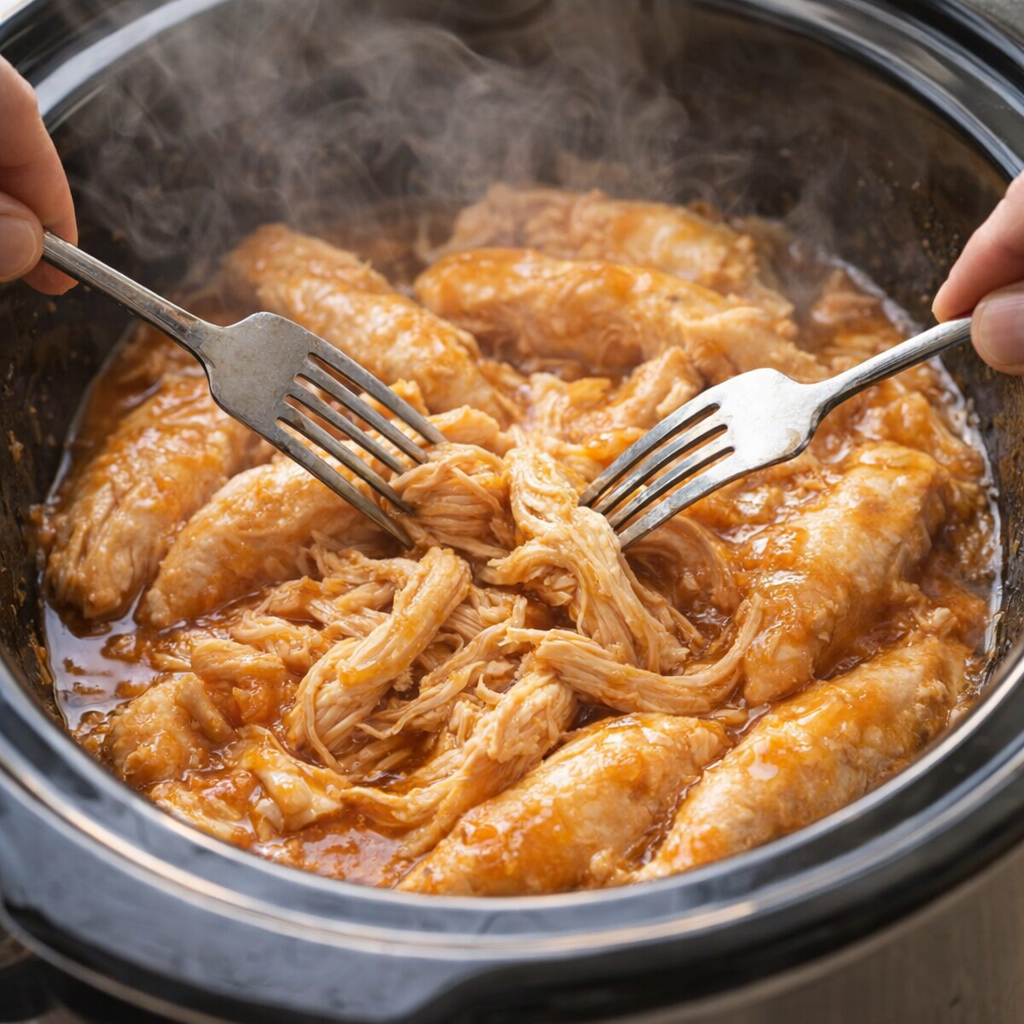
Once the chicken is done, use two forks to gently shred or chunk the tenderloins right in the slow cooker, stirring them into the sauce so every piece is coated.

Cooked chicken being shredded in the slow cooker

Add the frozen peas directly to the slow cooker, stir them into the hot chicken and sauce, then cover and let sit on WARM or LOW for 5–10 minutes, just until the peas are bright green and heated through.

Taste the sauce and adjust if needed: add a splash more soy sauce for saltiness or a spoonful of apricot preserves if you want it sweeter.

Serve the spring blossom chicken and sauce over rice, noodles, or potatoes, spooning extra sauce over the top. Garnish with a little cracked black pepper if you like, and get ready for everyone to ask for seconds.

Variations & Tips

To make this a bit lighter, use a light or fat-free Italian dressing and choose a reduced-sugar apricot spread; the flavor will still be bright and tangy. If you don’t have apricot preserves, peach or orange marmalade works in a pinch and keeps that springy, fruity vibe.

Spring blossom chicken packed into meal prep containers

For extra veggies, toss in a cup of frozen mixed vegetables along with the peas at the end. If you prefer a thicker, stickier glaze, whisk 1 tablespoon cornstarch with 2 tablespoons cold water and stir it into the hot sauce about 20 minutes before serving, then let it cook on HIGH until slightly thickened.

You can also swap the tenderloins for frozen chicken breasts—just add 1 extra hour on LOW and shred well before serving. For a little heat, stir in 1–2 teaspoons of crushed red pepper flakes with the sauce mixture. Leftovers keep well in the fridge for up to 3 days and reheat beautifully, or you can shred the chicken more finely and pile it on toasted buns for an easy sandwich night.m

April Comfort: Simply 4 ingredients. I make it when I need something baking while I prep Sunday dinner

by


This 4-ingredient slow cooker snickerdoodle bar recipe is my quiet little April comfort—something I throw together when I want the house to smell like a bakery while I’m busy prepping Sunday dinner. It leans on a simple cake mix shortcut, but the long, gentle heat of the slow cooker gives you a soft, chewy interior and a glistening caramelized cinnamon-sugar crust that feels like an old-fashioned snickerdoodle cookie bar.

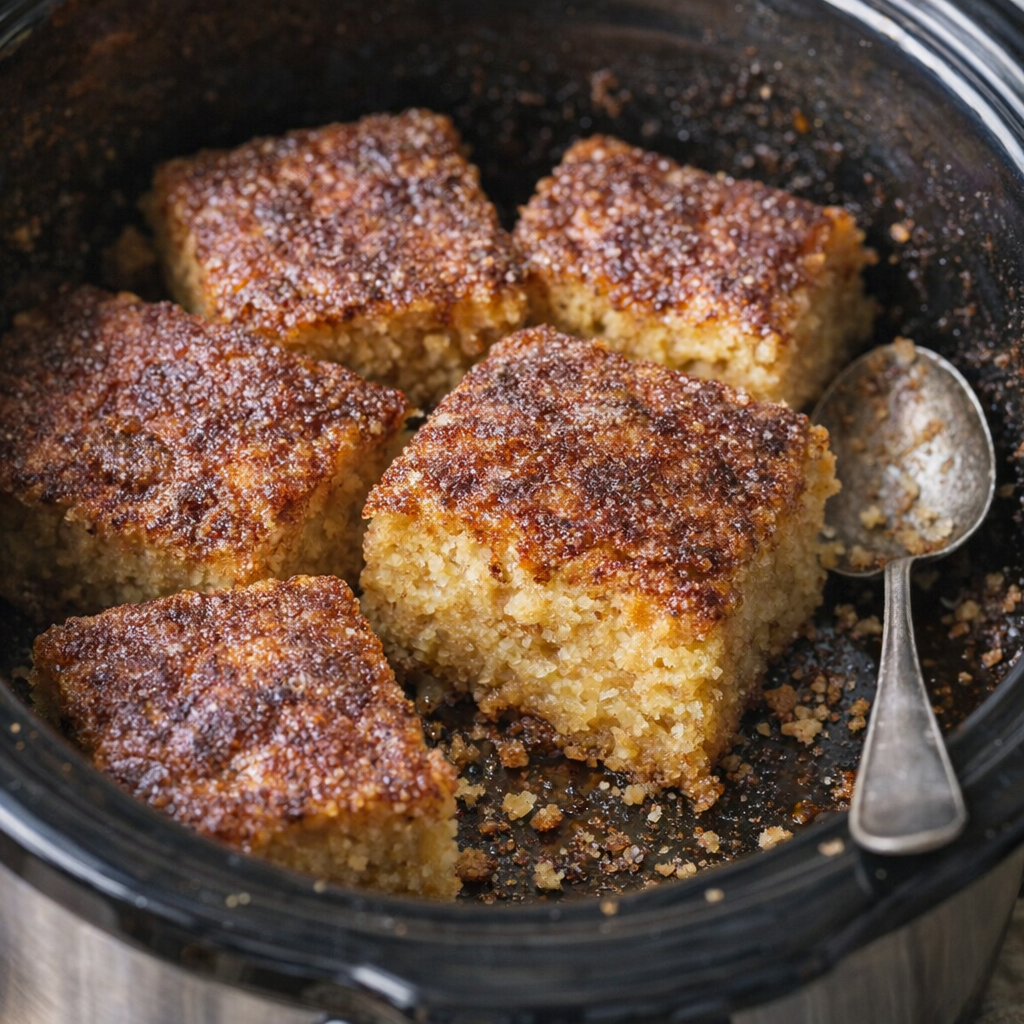
Slow cooker snickerdoodle bars served warm in the crock

It’s the kind of hands-off dessert that makes family meals feel special without adding more work to your plate.

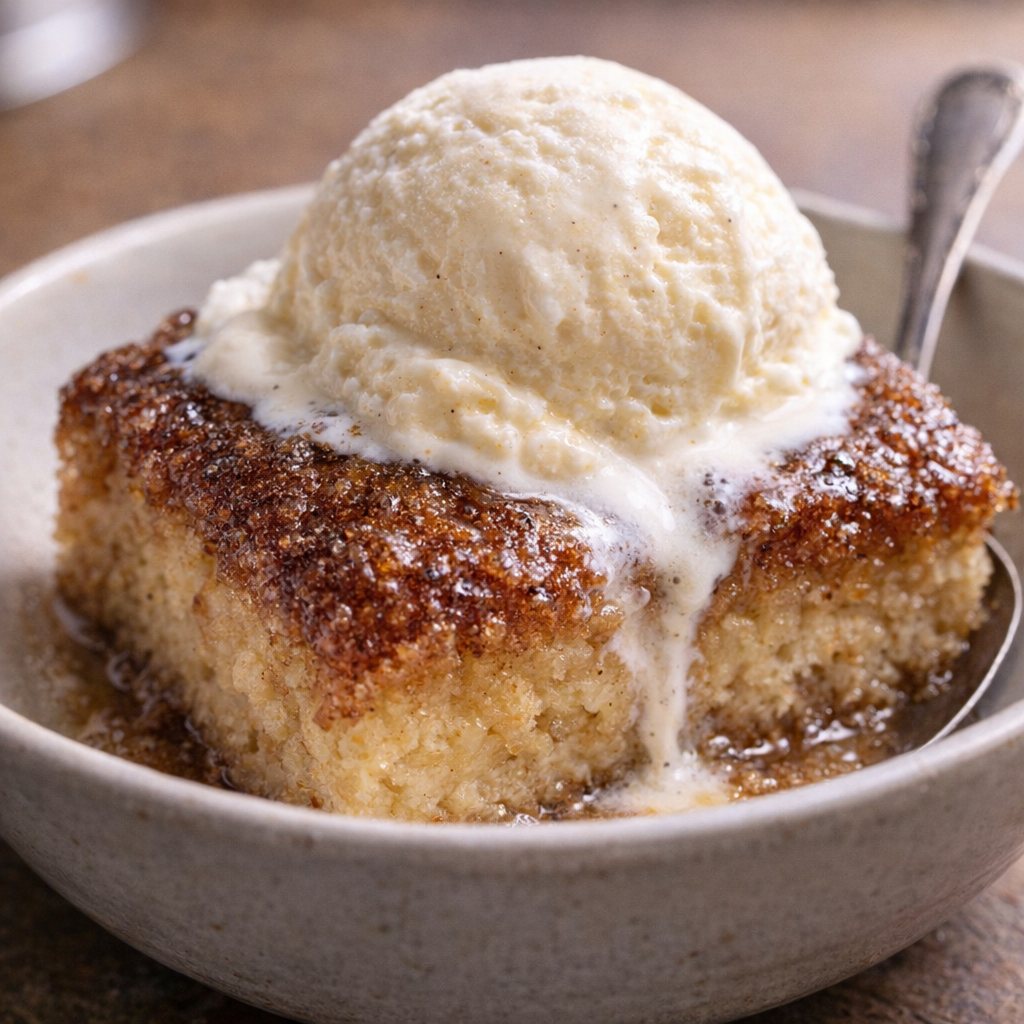
Let the bars cool slightly in the slow cooker, then cut into squares or scoop into bowls. These are wonderful served warm with a scoop of vanilla ice cream or a dollop of whipped cream so it melts into the chewy, golden interior. A cup of coffee, hot cocoa, or cold milk makes a cozy pairing.

Snickerdoodle bar topped with melting vanilla ice cream

If you’re serving Sunday dinner, I like to keep the main meal simple—roast chicken, mashed potatoes, and a green vegetable—then bring out these bars still in the slow cooker so everyone can see that caramelized crust and help themselves.

4-Ingredient Slow Cooker Snickerdoodle Bars

Servings: 8-10


Ingredients

1 box (15.25 oz) yellow cake mix

1/2 cup (1 stick) unsalted butter, melted and slightly cooled
2 large eggs
1/3 cup granulated sugar mixed with 1 tablespoon ground cinnamon (for topping and lining)

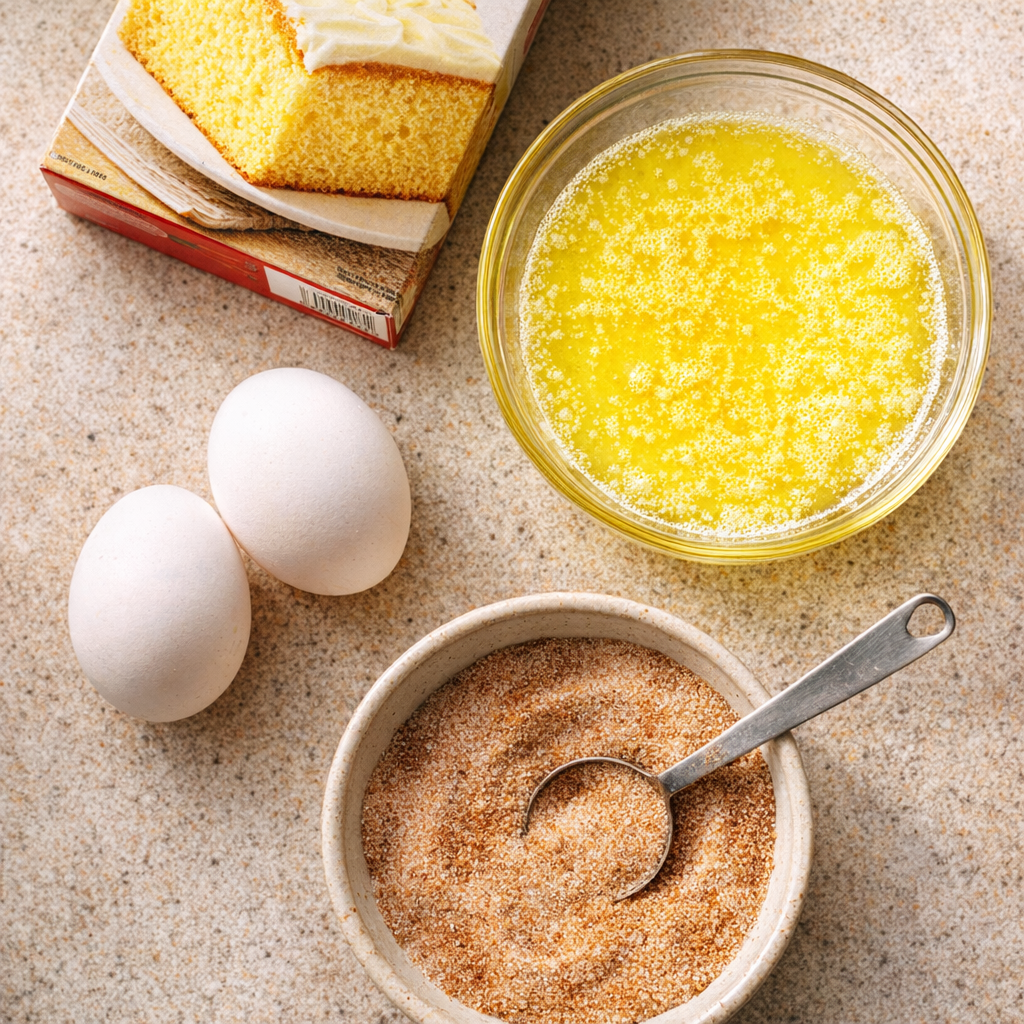
Simple snickerdoodle bar ingredients on a kitchen counter

Directions

Lightly grease the insert of a 4- to 6-quart slow cooker with butter or nonstick spray. This helps the bars release easily and encourages that caramelized edge.

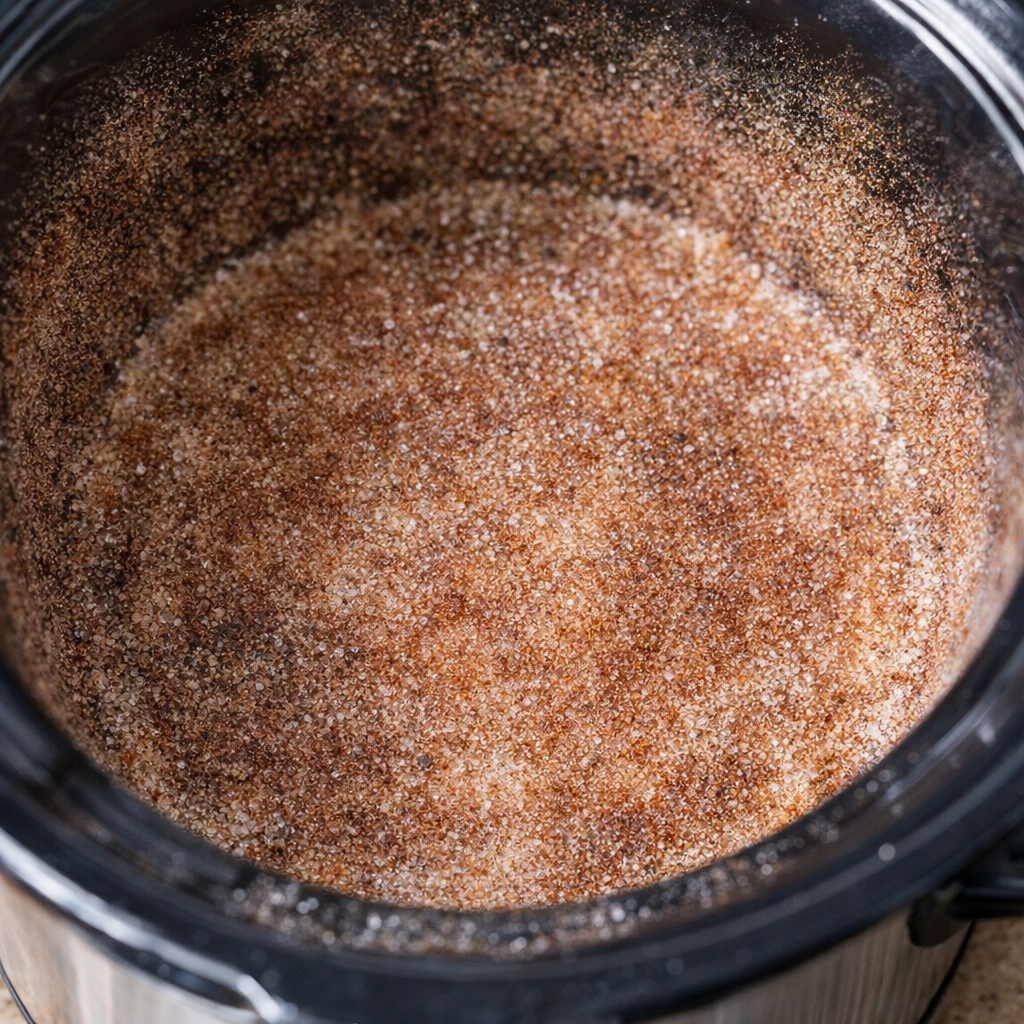
Sprinkle 2 to 3 tablespoons of the cinnamon-sugar mixture evenly over the bottom and about 1 inch up the sides of the greased slow cooker insert. This creates a flavored “crust” that will turn glistening and caramelized as it cooks.

Cinnamon sugar coating the inside of a slow cooker insert

In a medium mixing bowl, whisk together the melted butter and eggs until smooth and glossy.

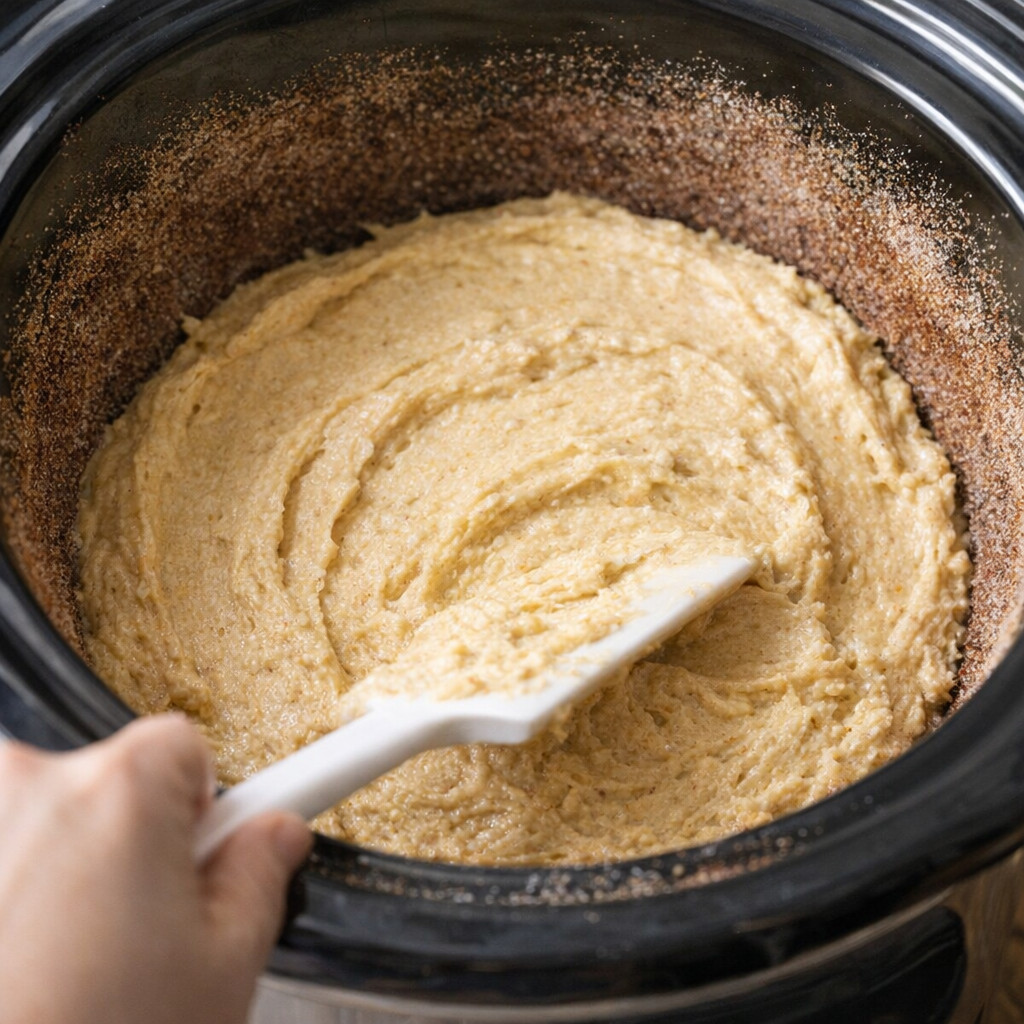
Add the dry yellow cake mix to the bowl and stir with a spatula or wooden spoon until a thick, smooth batter forms. It will be quite dense—keep stirring until no dry pockets of mix remain.

Spoon the batter into the prepared slow cooker insert. Use a spatula to spread it into an even layer, gently pressing it toward the cinnamon-sugar–coated sides.

Thick snickerdoodle batter being spread in the slow cooker

Sprinkle the remaining cinnamon-sugar mixture evenly over the top of the batter, covering it from edge to edge. This is what will form the glistening caramelized crust on top.

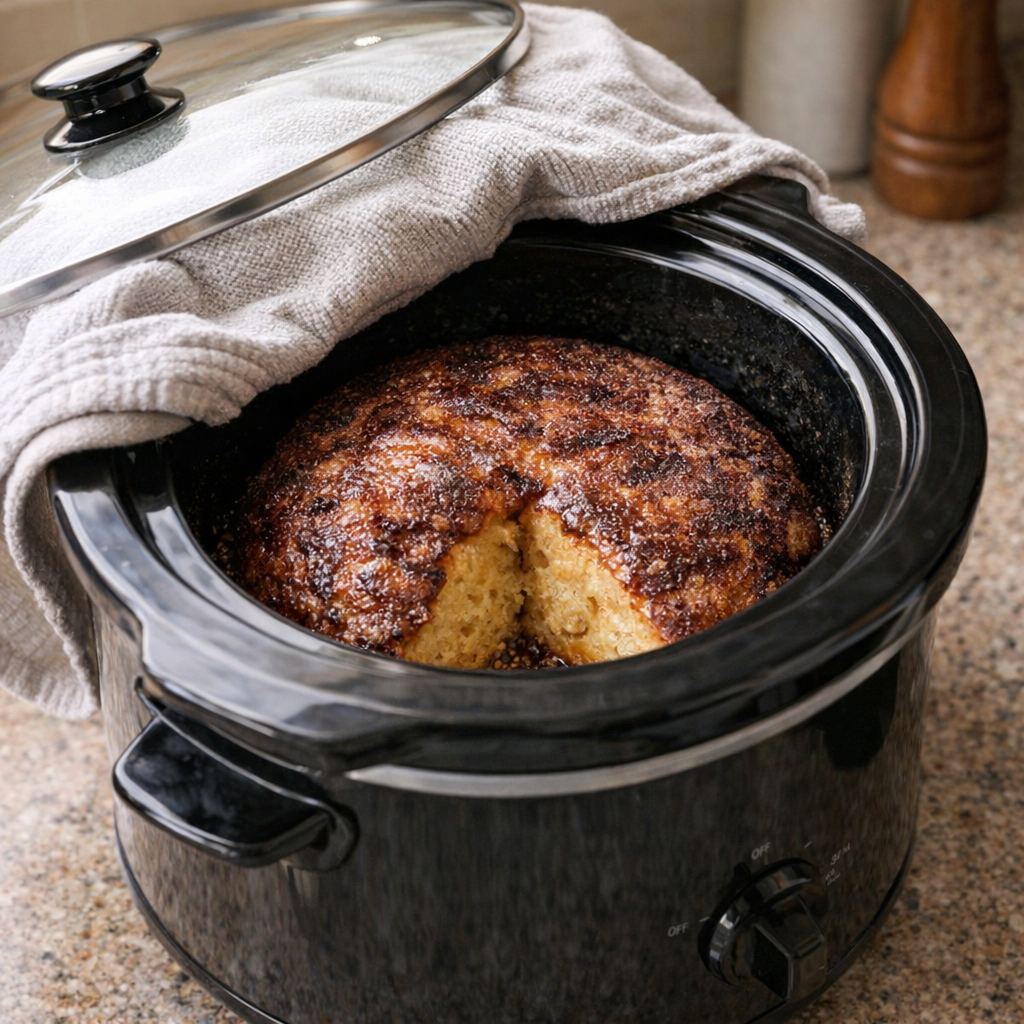
Cover the slow cooker with a clean kitchen towel, then place the lid on top of the towel. The towel catches condensation so the top of the bars can set and caramelize instead of getting soggy.

Slow cooker covered with a kitchen towel under the lid

Cook on LOW for 2 to 3 hours, or until the edges are deeply golden and caramelized and the center is just set but still soft when lightly pressed. Every slow cooker runs a bit differently, so begin checking around the 2-hour mark. Avoid lifting the lid too often so you don’t lose heat.

Once done, turn off the slow cooker and let the bars rest, covered, for 15 to 20 minutes. This helps the chewy interior finish setting while keeping that glossy, crackly cinnamon-sugar top intact.

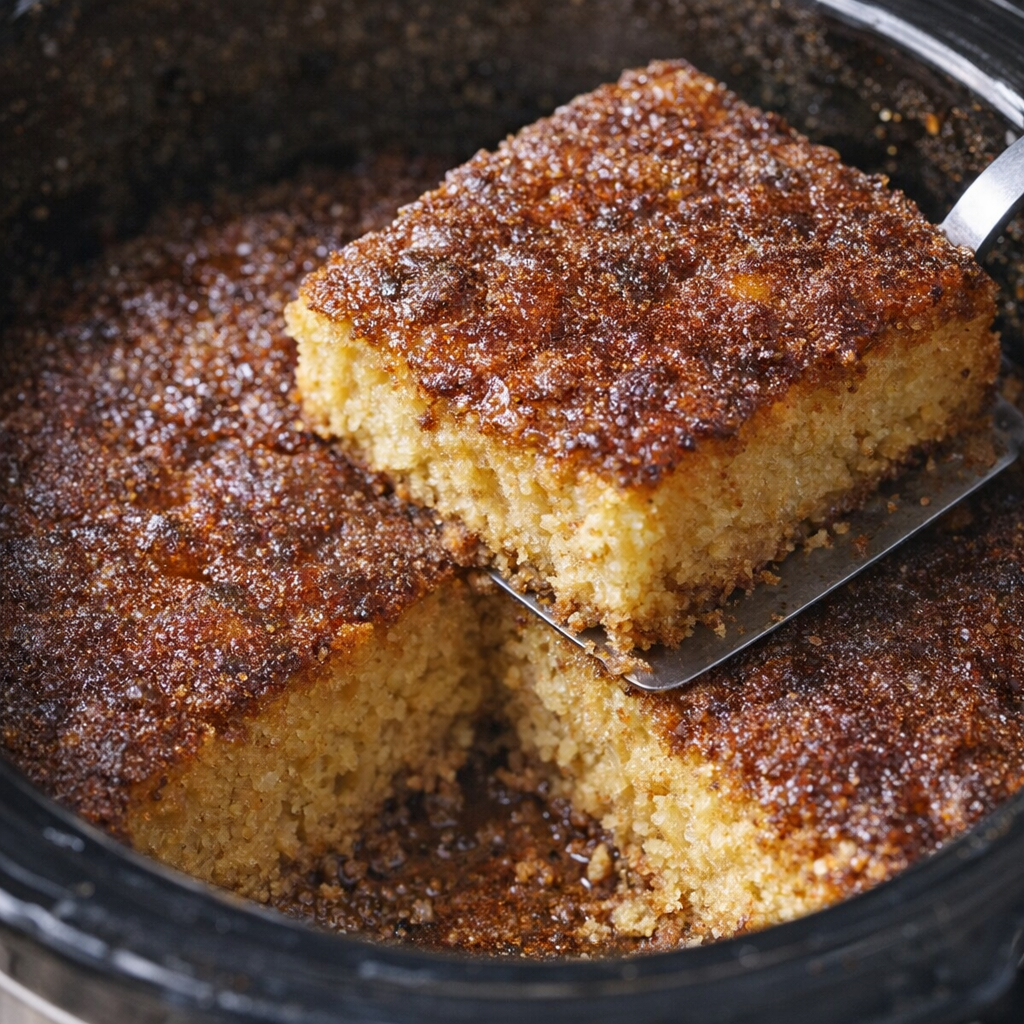
Run a thin spatula or butter knife around the edge to loosen. You can cut the bars directly in the slow cooker, or lift them out in sections using a wide spatula. Serve warm for the best texture, enjoying the contrast between the caramelized crust and the soft, golden interior.

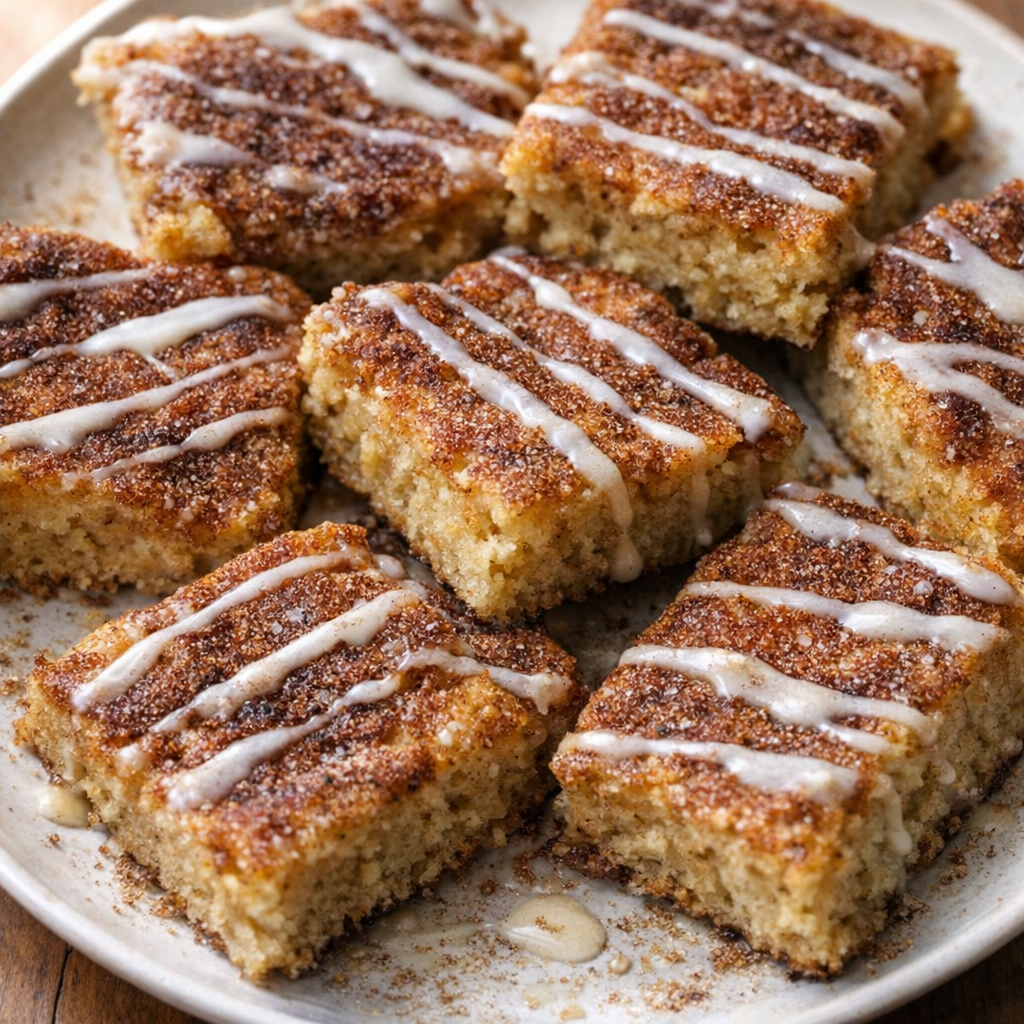
Freshly cooked snickerdoodle bars with a crackly cinnamon top

Variations & Tips

For picky eaters who don’t love a strong cinnamon flavor, cut the cinnamon in half and replace some of the topping sugar with plain granulated sugar to keep the crust sweet but milder. If you prefer a deeper, almost toffee-like flavor, swap half of the granulated sugar for light brown sugar in the cinnamon-sugar mixture.

For a slightly richer, more custardy interior, stir in 1 teaspoon of vanilla extract with the butter and eggs. To dress this up for company, drizzle the cooled bars with a simple glaze (powdered sugar plus a splash of milk and vanilla) or a thin caramel sauce just before serving.

Snickerdoodle bars drizzled with glaze on a serving plate

You can also turn this into a fun sundae bar: keep the snickerdoodle bars warm in the slow cooker on the “keep warm” setting and set out bowls with ice cream, whipped cream, and a few toppings so everyone can build their own dessert. If you’re short on time, you can cook on HIGH for about 1 1/2 to 2 hours, but watch closely near the end so the crust caramelizes without burning.

My sister-in-law begged me for this recipe after Easter dinner last year. Creamy, rich, and completely effortless

by


This 4-ingredient slow cooker creamy potato bake is exactly the kind of dish that quietly steals the show at a holiday table. I first brought it to an Easter gathering as a low-stress side, and it disappeared so fast that my sister-in-law cornered me in the kitchen to beg for the recipe.

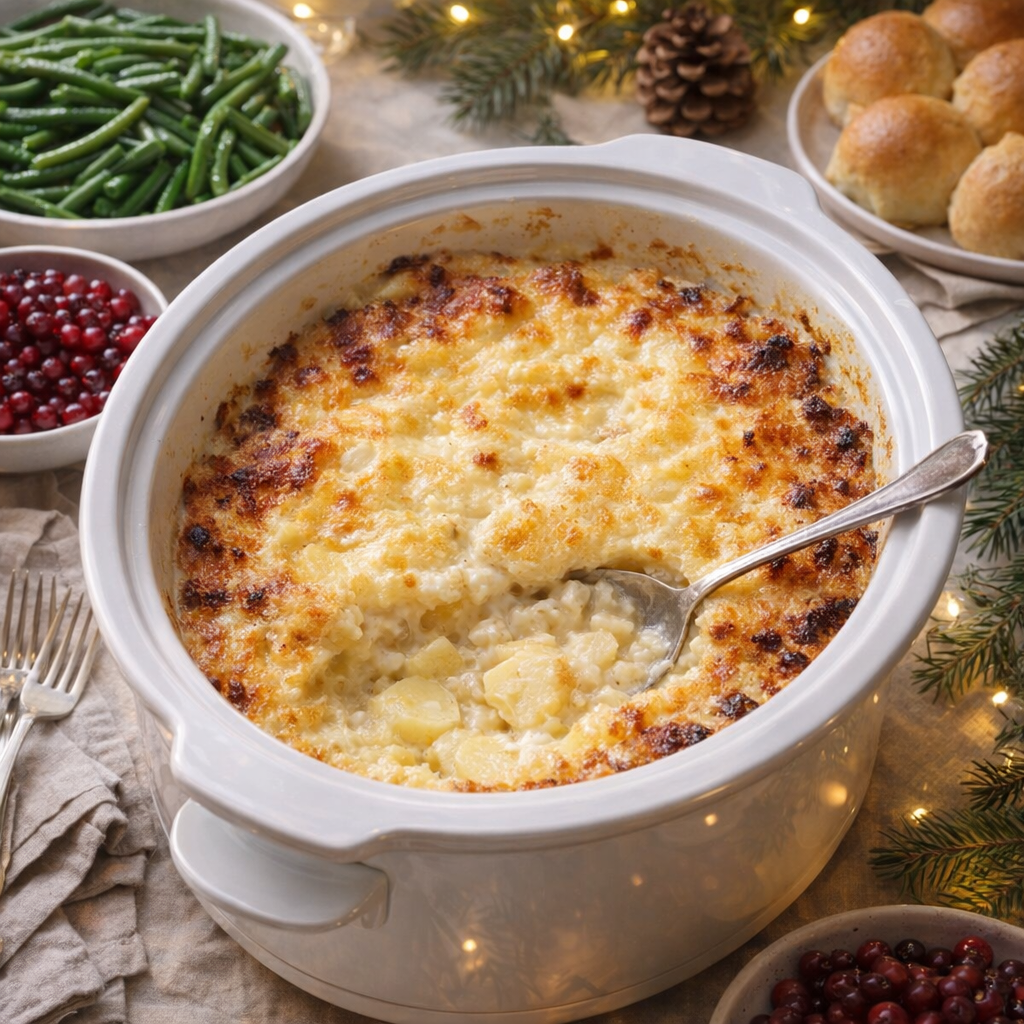
Creamy potato bake served from a slow cooker on a holiday table

It leans on frozen diced hash browns and a simple cream mixture to create a rich, velvety casserole with almost no effort. Everything bakes together low and slow in the slow cooker, so you get that golden, bubbling, creamy center with practically zero hands-on time—perfect when the oven is already busy with ham and rolls.

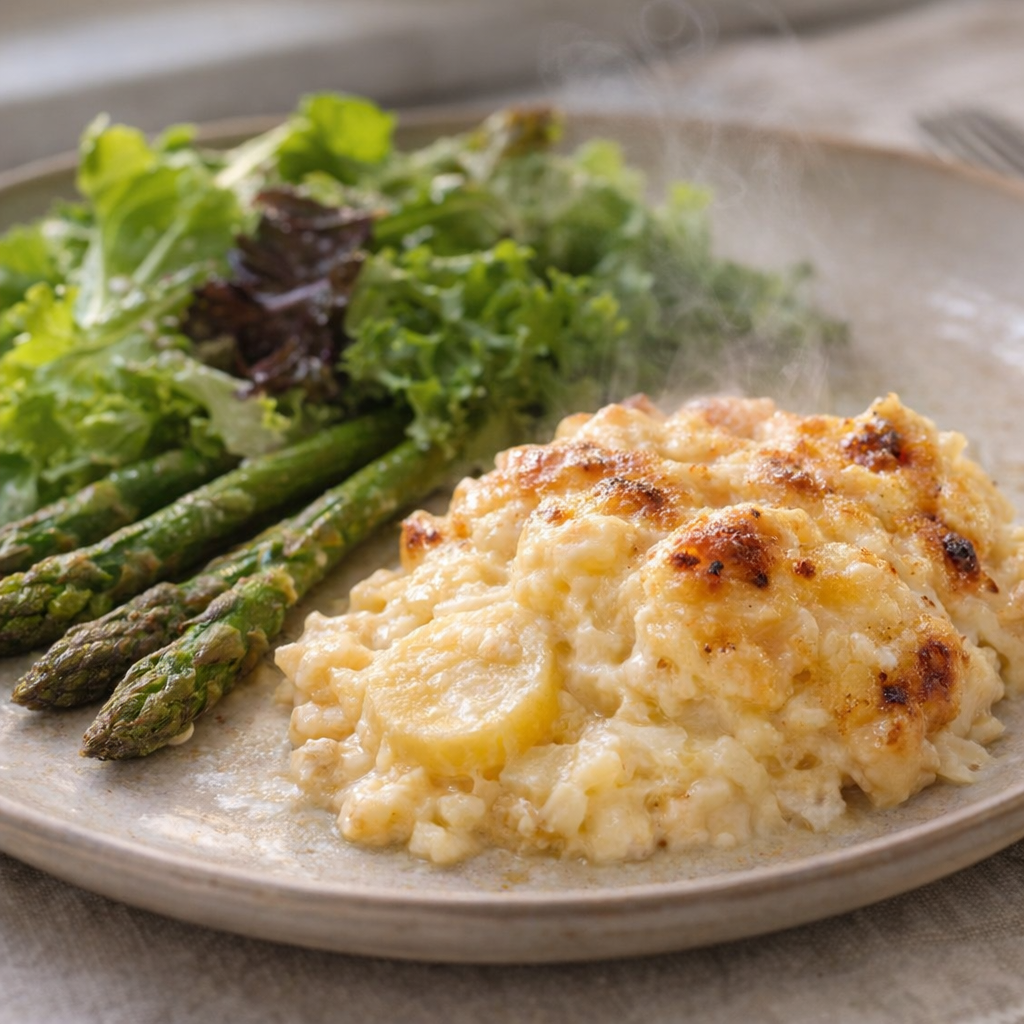
Serve this creamy potato bake straight from the slow cooker on its warm setting, spooned alongside baked ham, roasted turkey, or a simple roast chicken. It’s especially good with something bright and acidic on the plate—think a crisp green salad with a tangy vinaigrette, steamed green beans with lemon, or roasted asparagus.

Plated serving of creamy potato bake with green vegetables

For brunch, pair it with scrambled eggs, fruit salad, and a simple green salad. A sharp, zippy condiment like grainy mustard or pickled vegetables on the table helps balance the richness.

4-Ingredient Slow Cooker Creamy Potato Bake

Servings: 8-10


Ingredients
2 pounds frozen diced hash brown potatoes (about 1 large bag, unthawed)
2 cups heavy cream
2 teaspoons kosher salt
1 1/2 teaspoons garlic powder
2 cups shredded sharp cheddar cheese, divided
Directions
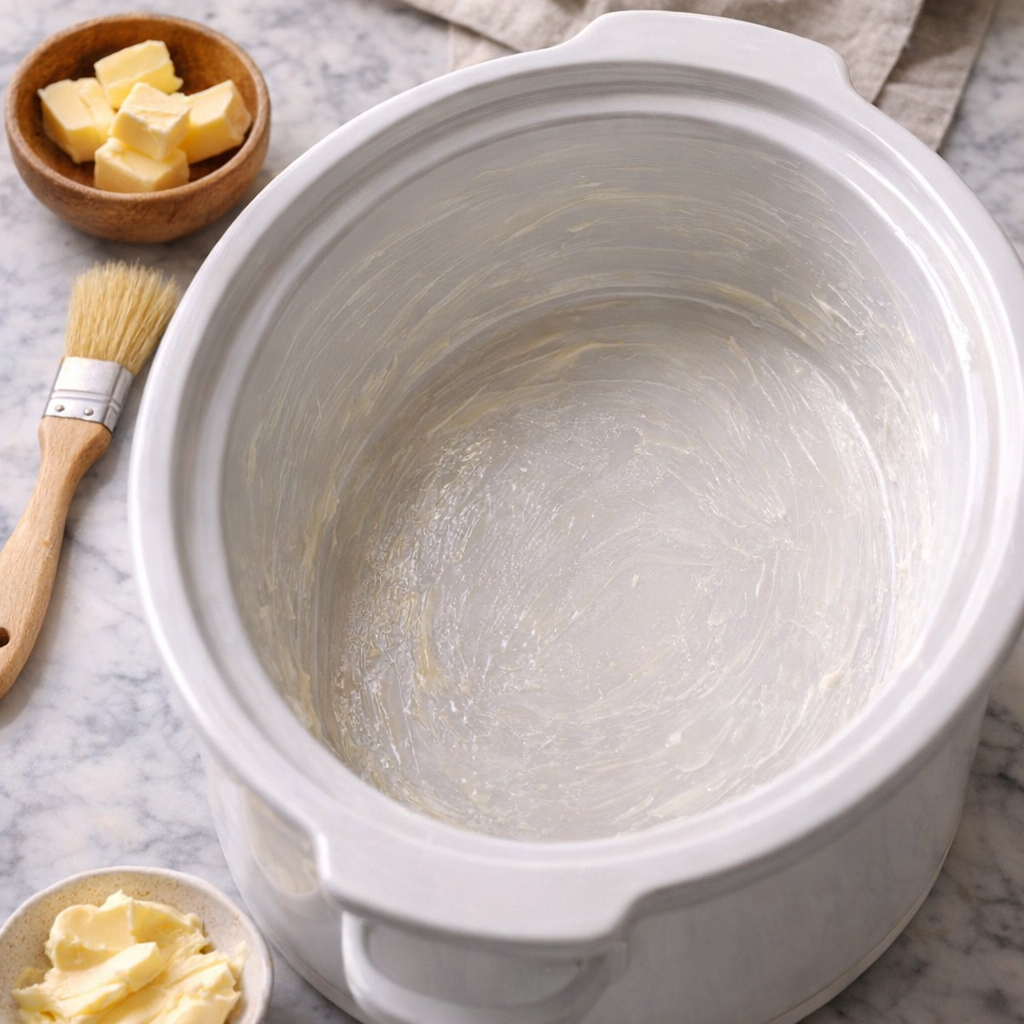
Lightly grease a large oval slow cooker (5- to 7-quart) with nonstick spray or a thin film of butter to help prevent sticking and promote those golden edges.
Slow cooker insert lightly greased and ready for casserole
In a large mixing bowl, whisk together the heavy cream, kosher salt, and garlic powder until the seasoning is evenly distributed throughout the cream.
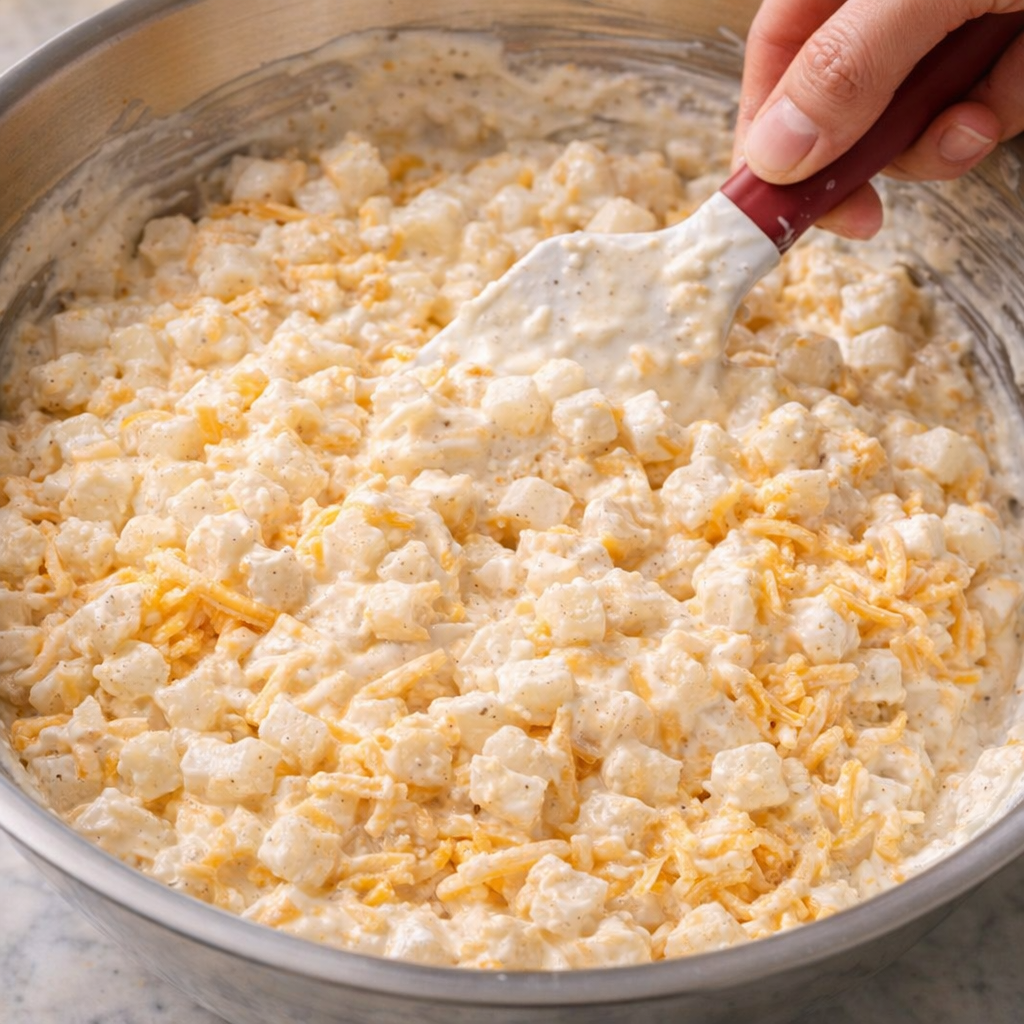
Add the frozen diced hash brown potatoes to the bowl (no need to thaw) and 1 1/2 cups of the shredded cheddar cheese. Toss gently with a spatula until all the potatoes are well coated in the creamy mixture and the cheese is evenly dispersed.
Hash browns and cheddar being mixed with seasoned cream
Transfer the potato mixture to the prepared slow cooker, spreading it into an even layer and smoothing the top lightly with the back of a spoon.
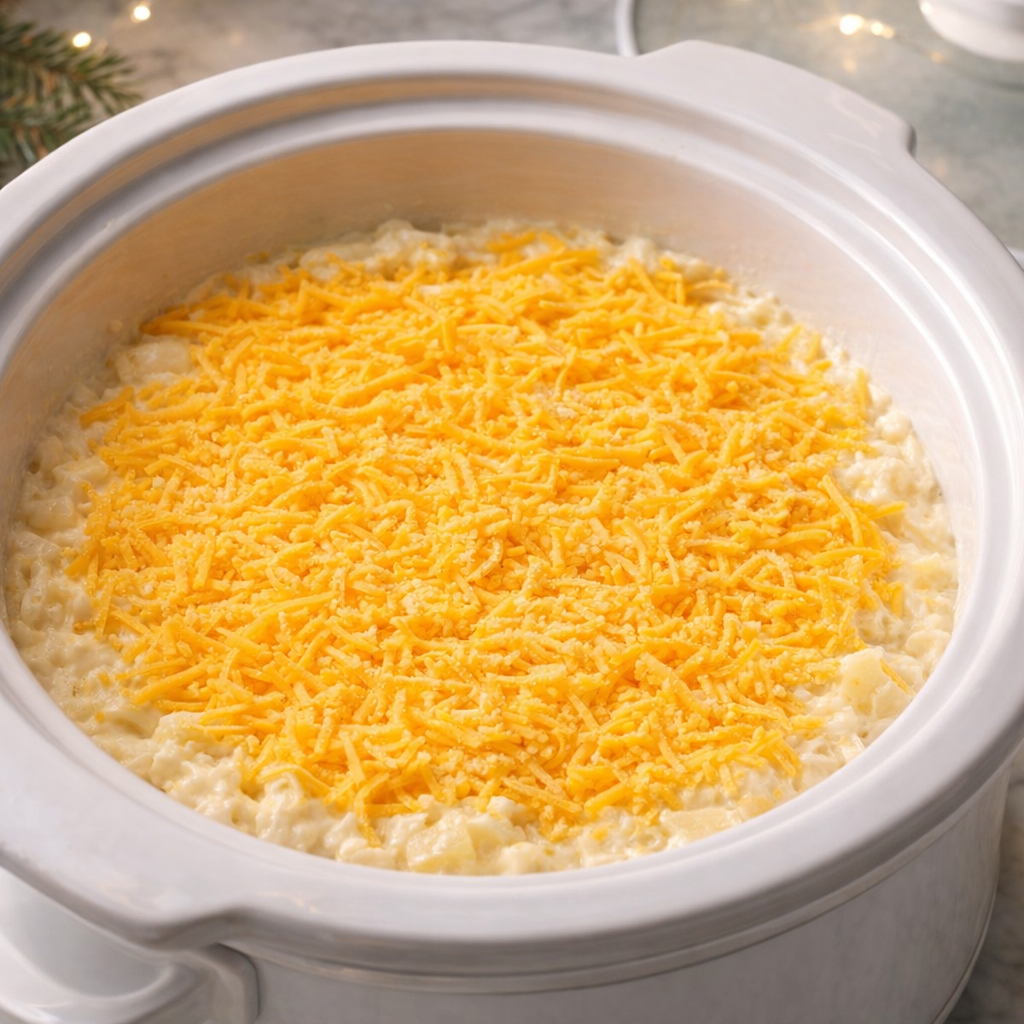
Sprinkle the remaining 1/2 cup shredded cheddar cheese evenly over the surface. This will create that golden, bubbling top you’re after.
Cover the slow cooker with the lid and cook on LOW for 4 to 5 hours, or until the potatoes are very tender when pierced with a fork and the edges are bubbling and lightly browned. Avoid lifting the lid during the first 3 hours so the casserole can set and stay creamy.
Cheddar-topped potato casserole ready to cook in slow cooker
If you’d like a deeper golden top and your slow cooker has a “bake” or “brown” function, use it for the last 15 to 20 minutes. Otherwise, simply let it continue on LOW until the cheese is melted and the edges are lightly caramelized.
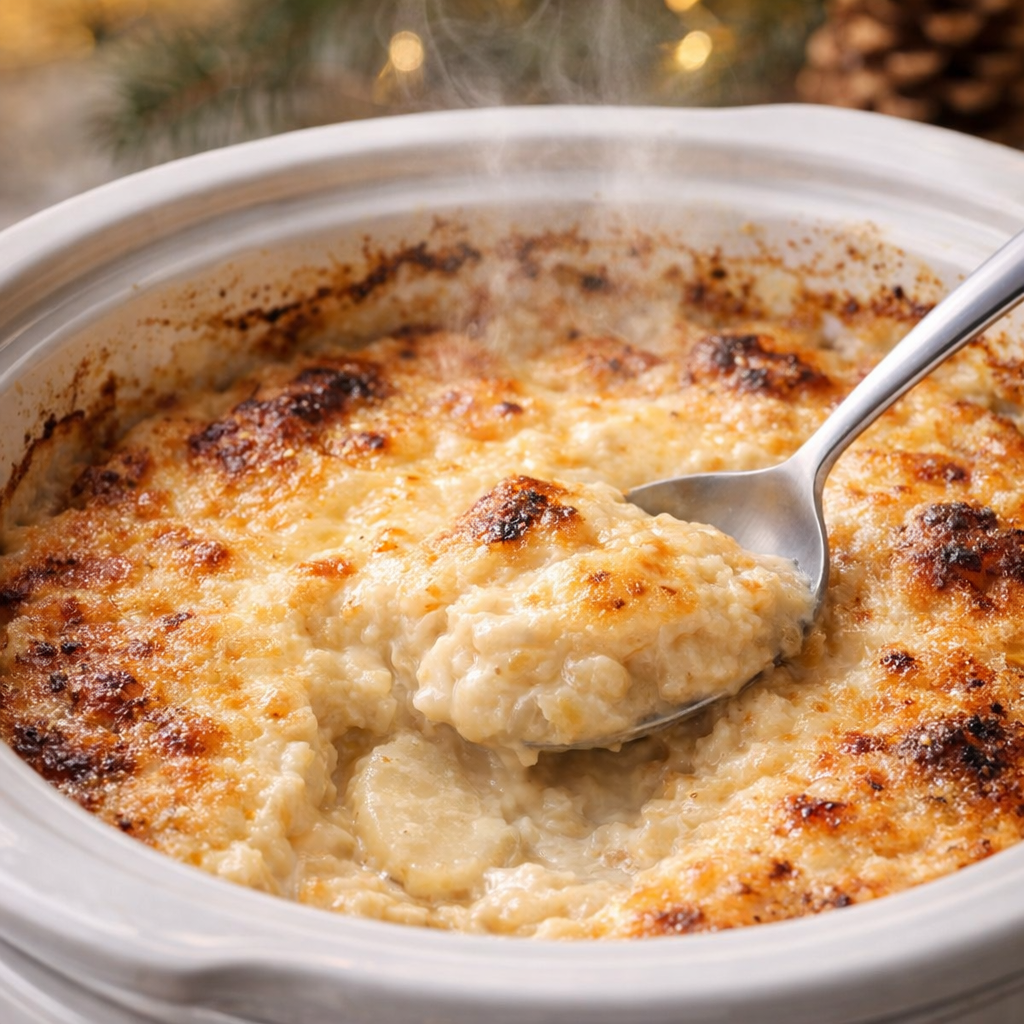
Once done, switch the slow cooker to WARM. Let the casserole rest, covered, for 10 to 15 minutes to thicken slightly before serving. Serve straight from the slow cooker, scooping down through the creamy center to show off the bubbling cheese and tender potatoes.
Variations & Tips
For a slightly lighter version, you can swap half of the heavy cream for whole milk or half-and-half; the casserole will still be creamy, just a bit less rich. If you prefer a more savory edge, add 1 teaspoon of onion powder or a pinch of smoked paprika to the cream mixture.
Freshly cooked potato bake with bubbling golden top

For cheese lovers, mix in a blend of cheeses—try half sharp cheddar and half Gruyère or Monterey Jack for extra melt and flavor. To make it more substantial for a brunch main, fold in 1 to 1 1/2 cups of diced cooked ham before transferring the mixture to the slow cooker.

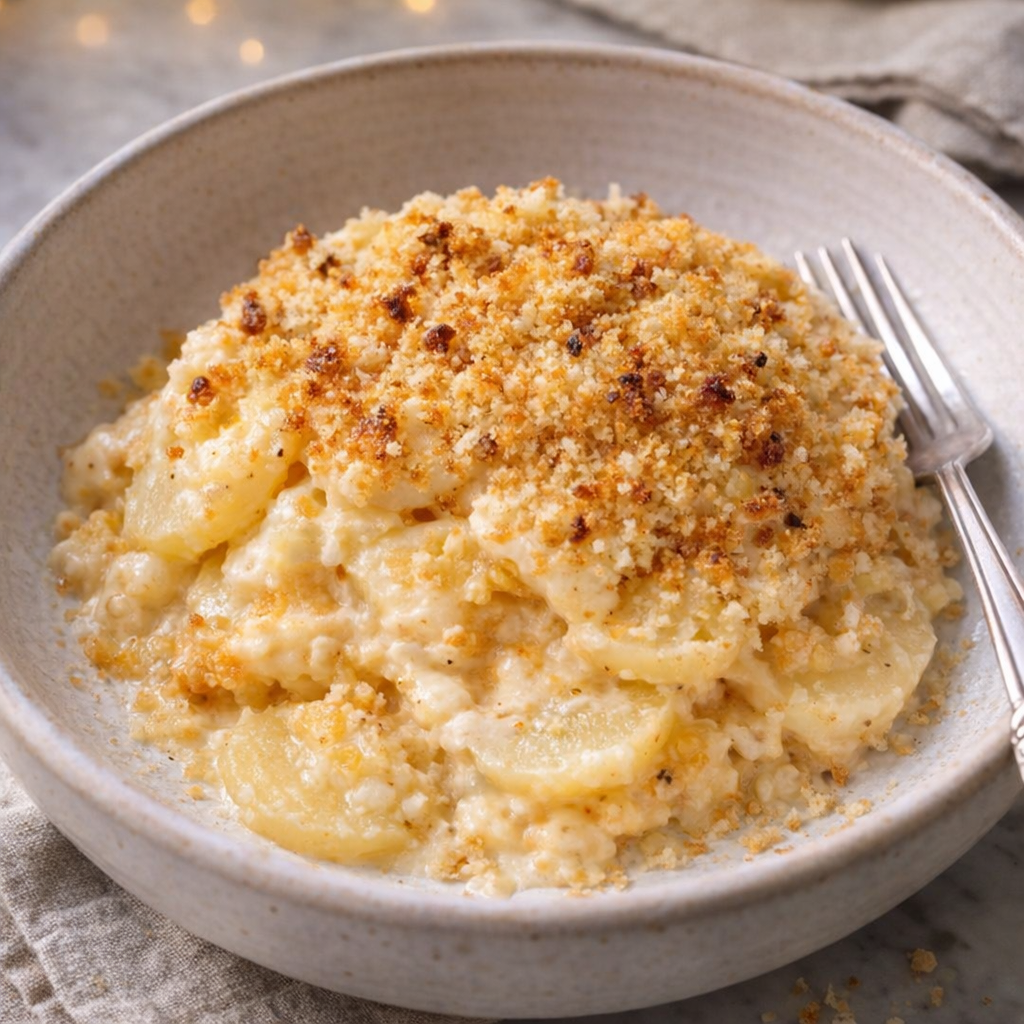
If you like a bit of texture contrast, sprinkle the finished casserole with finely crushed buttery crackers or toasted panko just before serving (add them at the end so they don’t get soggy in the slow cooker). For those cooking ahead, you can toss the potatoes with the cream and cheese, transfer to the slow cooker insert, cover, and refrigerate overnight; in the morning, set the insert into the base and cook as directed, adding 30 minutes or so to the total time if starting from cold.

Creamy potato bake topped with crisp crumbs and served

Top Ad 728x90